
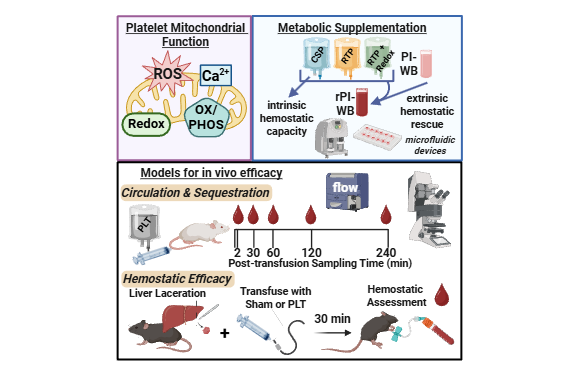
Metabolic Regulation of Stored Platelet Hemostatic Function
Cold-stored platelets (CSP) exhibit phenotypes representative of multiple endogenous platelet subpopulations (activated/adherent, aged/apoptotic, or procoagulant) that may be beneficial for actively bleeding patients, yet the mechanisms regulating the development of this hybrid phenotype/hemostatic function during storage have yet to be determined. As endogenous platelet phenotypes are regulated by metabolic activity and mitochondrial function, our working hypothesis is that the CSP hybrid phenotype is directly related to cold storage-induced alterations of platelet metabolism. Using comprehensive metabolic, phenotypic, and functional profiling of CSP, we found that (i) cold storage preserved key metabolic pathways used by platelets during activation and aggregation, and (ii) CSP adhered to collagen more readily under arterial shear than room temperature stored platelets (RTP) and maintained the ability to form clot over the course of extended storage. Integration of our metabolic data with phenotypic and functional data identified key metabolic pathways associated with CSP clot formation. Interestingly, some of these metabolites are known to play a role in modulating mitochondrial function in nucleated cells, however, the contributions of these metabolites to both endogenous platelet and platelet product hemostatic function are relatively unknown. We are currently exploring these areas of research, with a focus on metabolic supplementation of stored platelet products and subsequent alterations in hemostatic function.