Experts Advancing Global Health

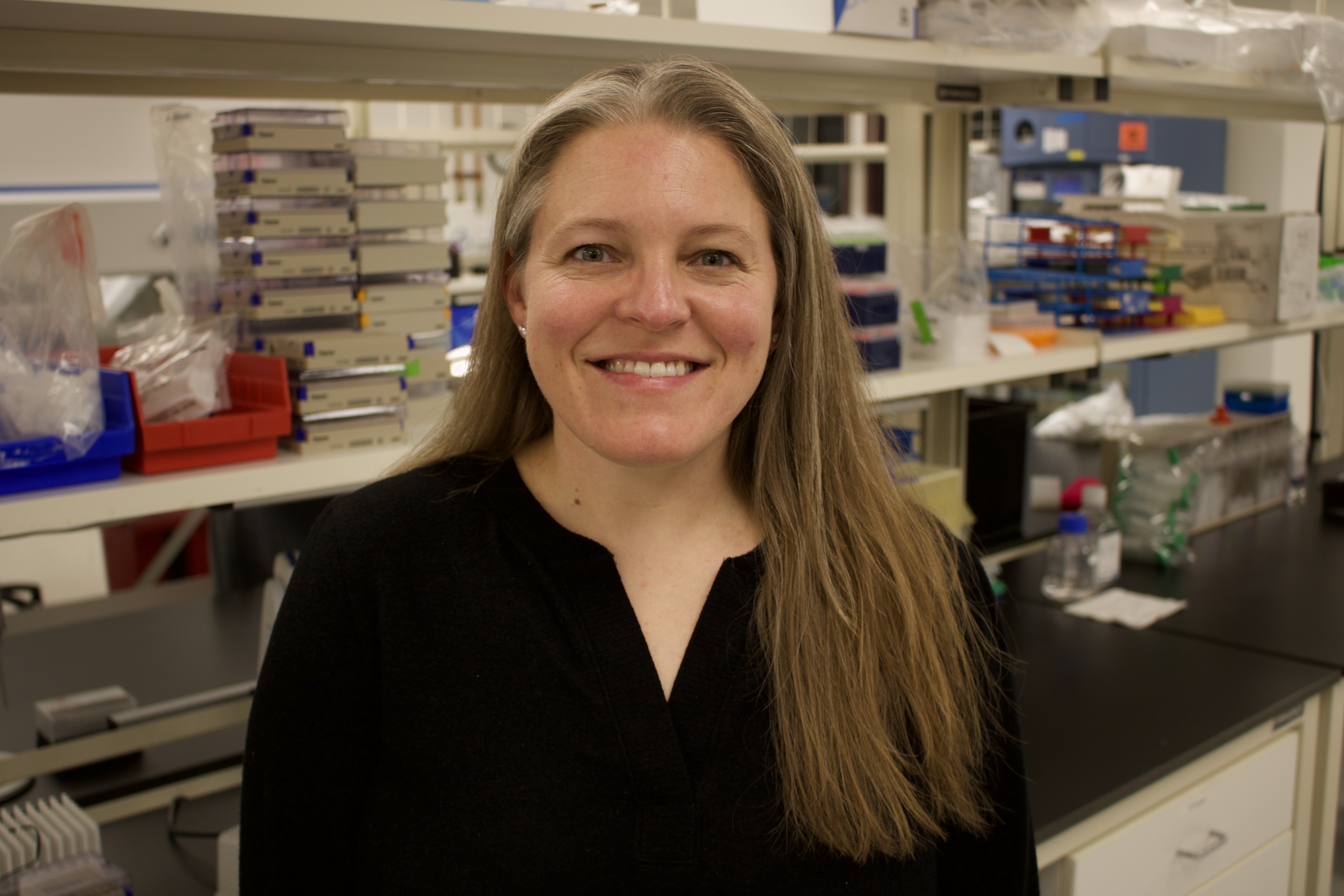
Kimberly A. Thomas, Ph.D.
Assistant Investigator
Dr. Thomas is an Assistant Investigator at Vitalant Research Institute (VRI) Denver. The overall goal of her research program is to improve precision transfusion medicine by providing patients with blood products that meet their specific needs. She applies approaches learned from her molecular and cellular immunology background to answer questions plaguing the transfusion medicine field. Dr. Thomas completed her B.S. in Biochemistry and Molecular Biology at a small liberal arts college, where she had over 3 years of hands-on molecular lab experience. This was followed by her Ph.D. in Immunology/Microbiology at the University of Alabama, Birmingham where she characterized the expression and function of a unique receptor in the TREM family found on circulating leukocytes. This led her to a postdoctoral position at UCLA in the field of alloimunity, where she studied the combinatorial effects of adaptive (antibodies) and innate (complement) immunity at the endothelial surface – the barrier between the donor organ and the recipient’s immune system. These experiences in the vascular space provided the groundwork for her next step into the field of transfusion medicine, where for the past 8 years, she has been studying the hemostatic, immune, and endothelial response to blood product transfusion.
Education & Training
B.S. in Biochemistry and Molecular Biology, California Lutheran University
Ph.D. in Microbiology, University of Alabama, Birmingham
Postdoctoral Fellow, University of California, Los Angeles
Postdoctoral Fellow, Washington University in St. Louis
Instructor, Research Track, Washington University in St. Louis
Current Positions
Assistant Investigator, Vitalant Research Institute, Denver, Colorado
Adjunct Assistant Professor, Department of Pathology, University of Colorado Anschutz Medical Campus, Aurora, Colorado