
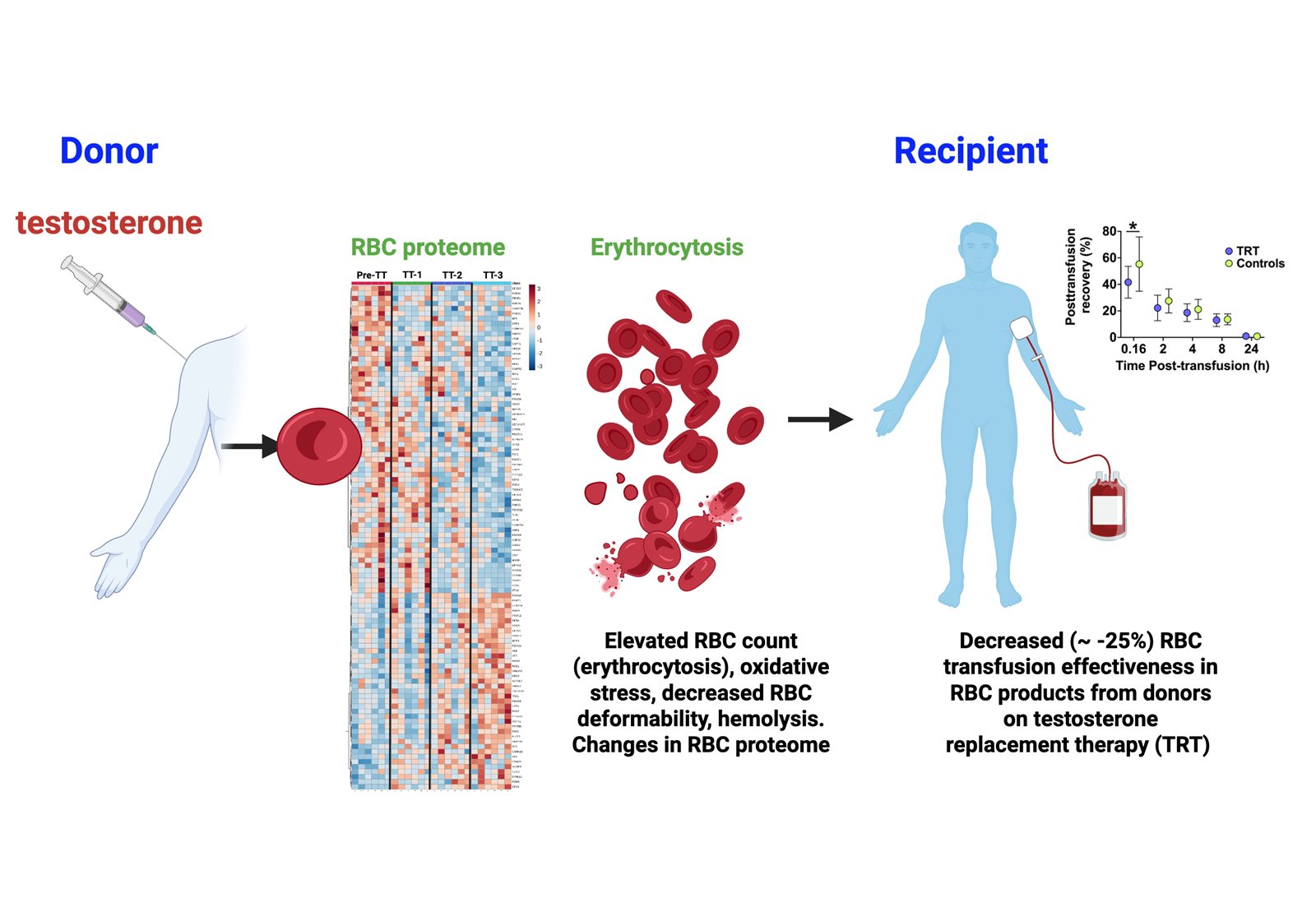
 Testosterone-depended sex differences in RBC biology and its impact on hemolysis and transfusion effectiveness.
Male sex is associated with increased red blood cell (RBC) susceptibility to hemolysis in cold-stored RBCs and in hemolytic diseases. We have found that the sex dichotomy in RBC biology and hemolysis is largely mediated by the action of testosterone in a mechanism likely to occur during erythropoiesis. Studies in the Kanias lab are focused on understanding how the variation in testosterone concentration among blood donors impacts the quality and survival of RBCs in transfusion practice. An integral part of our research is dedicated to blood products from donors on testosterone therapy (TT). To date, we have demonstrated that TT and the natural genetic variation in plasma testosterone concentration among blood donors are significantly correlated with increased oxidative hemolysis, decreased membrane deformability and shorter lifespan of transfused RBCs in patients. Further, RBC units from TT donors contain supraphysiological concentrations of testosterone, and based on a retrospective study, the transfusion effectiveness of RBCs from TT donors is approximately 75% of that of non-TT male donors, with higher number of additional RBC transfusions within 48 hours of the index transfusion event. Currently, we conduct a genome-wide association study to identify genetic determinants of plasma testosterone in blood donors that interact with hemolysis and RBC transfusion effectiveness.