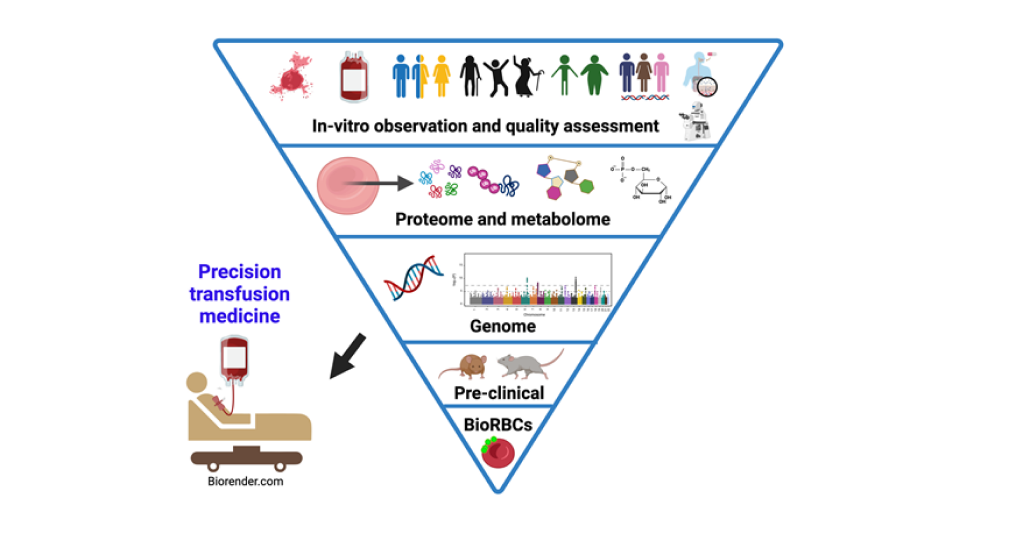
 Precision transfusion medicine: Omics studies in blood donors to identify genetic and biologic determinants of RBC function and survival in storage and after transfusion.
Genetic, biologic and lifestyle factors among blood donors contribute to variations in the quality of blood components. For example, age and aging are associated with multiple changes in RBC biology and characteristics, including altered antioxidant metabolisms and membrane elasticity. Obesity is another factor we found to be associated with metrics of RBC dysfunction. Additionally, genome-wide association studies of hemolysis in blood donors (REDS-III RBC-Omics) identified multiple single nucleotide polymorphisms (SNPs) associated with hemolysis in cold storage and in response to osmotic or oxidative stress. The Kanias lab is specifically interested in studying SNP interactions with sex, ancestry and body mass index using mouse models, omics approaches and donor-recipient linkage studies (vein-to-vein) to determine which SNPs or other donor factors impact RBC transfusion effectiveness in patients.