Experts Advancing Global Health
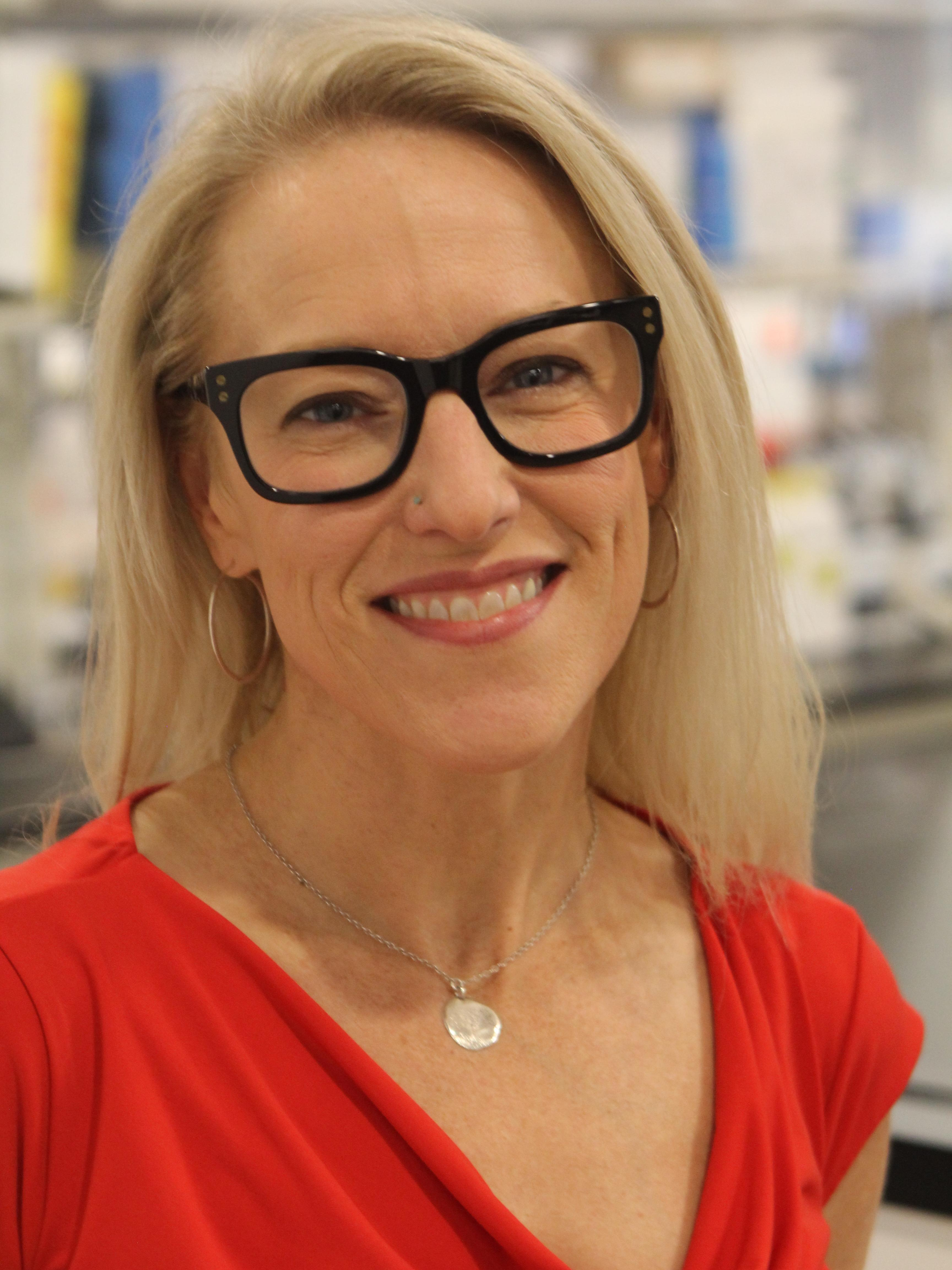
Shana D. Hughes, Ph.D., MPH
Assistant Investigator, Medical Anthropology, Vitalant Research Institute, San Francisco, California
Shana D. Hughes, Ph.D., MPH, is an assistant investigator at Vitalant Research Institute (VRI). As an applied medical anthropologist, she often employs qualitative and ethnographic methods to investigate questions raised by clinical or epidemiological data, such as why people engage in particular behaviors, and what those behaviors mean to them. Fundamentally, her research attends to the way notions of risk, identity and relationships — which take shape within personal, socio-cultural, and historical contexts — are implicated in health decisions, with the aim of understanding how this knowledge might be applied to improve health outcomes.
Prior to joining the Research Institute, Dr. Hughes was based at the Division of Prevention Science at the University of California, San Francisco, where she focused mainly on HIV prevention. Her research program at VRI is centered on blood donation, theorizing it as a biosociocultural process and seeking ways to translate research findings into practice. Her ultimate goal is to contribute to building the safe and sufficient blood supply required to meet the demands of current and future patients.
Current Positions
Assistant Investigator, Medical Anthropology, Vitalant Research Institute, San Francisco, CA
Education & Training
B.A., Latin American Area Studies, University of Kansas
M.A., Latin American Area Studies, University of Kansas
Graduate Certificate, Women’s Studies, University of Kansas
MPH, Global Health (Communicable Disease concentration), University of South Florida
Ph.D., Applied Anthropology, University of South Florida
Publications
Peer-Reviewed Publications
- Hughes S, Sheon N, Siedle-Khan B, Custer B for the NHLBI Recipient Epidemiology and Donor Evaluation Study-III (REDS-III). 2015. Saving lives, maintaining safety, and science-based policy: qualitative interview findings from the Blood Donation Rules Opinion Study (Blood DROPS). Transfusion 55(12):2835-2841. https://doi.org/10.1111/trf.13268
- Hughes S, Custer B, Laborde N, Sheon, N. 2018. Transition to a 1-year Deferral for Male Blood Donors Who Report Sexual Contact with Men: Perspectives of Staff at One Blood Center. Transfusion 58(8):1909-1915. doi: 10.1111/trf.14632PMID: 29664123
- Van den Berg K, Murphy EL, Louw VJ, Maartens G, Hughes SD. 2023. Motivations for Blood Donation by HIV-positive Individuals on Antiretrovirals in South Africa: A Qualitative Study. Transfusion Medicine 33(4):277-286. DOI: https://doi.org/10.1111/tme.12957
- Hughes SD, France CR, West-Mitchell KA, Pina T, McElfresh D, Sayers M, Bryant BJ. 2023. Advancing Understandings of Blood Donation Motivation and Behavior. Transfusion Medicine Reviews 37(4):150780. doi: 10.1016/j.tmrv.2023.150780; PMID: 37996288.
- Ruiz JM, Hughes SD, Flores M, Custer B, Ingram M, Carvajal S, Rosales C, Kamel H, Vassallo R, France CR. 2024. Neighborhood Ethnic Density and Disparities in Proximal Blood Donation Opportunities. Transfusion 64(6):1008-1015. DOI: https://doi.org/10.1111/trf.17847
Books and Chapters
- Haw J, Hughes SD, Holloway K. In press. Introduction to Qualitative Methodologies. In Research Design in Transfusion Medicine. Q. Eichbaum, ed. AABB Press.
- Haw J, Evans H, Khandelwal A, Hughes SD. In press. Community Based Participatory Research Approaches. In Research Design in Transfusion Medicine. Q. Eichbaum, ed. AABB Press.
- Vindrola-Padros C, Iqbal S, Fatima Q, Arshad S, Hughes SD. In press. Ethnographic Opportunities for Transfusion Medicine Research: A practical introduction to rapid ethnographies. In Research Design in Transfusion Medicine. Q. Eichbaum, ed. AABB Press.
- Crowder LA, Hughes SD. In press. Introduction to Mixed Methods Research. In Research Design in Transfusion Medicine. Q. Eichbaum, ed. AABB Press.
- Eichbaum Q, Hughes SD.* In press. Sequential Mixed Methods Designs. In Research Design in Transfusion Medicine. Q. Eichbaum, ed. AABB Press. *co-first authors
Other Publications
Custer B and Hughes S. 2020. Donor Compliance Research: What Are You Thinking? Transfusion 60(1):1-3.
Research Interest
Social Construction of Risk and Impact on Health-related Behaviors
In the scholarly literature in medicine and public health, “risk” is often treated as self-evident and objectively verifiable. In contrast, engaging with people’s lived experiences has led me to problematize such constructions. Critical consideration reveals that the meanings people assign to health outcomes and the behaviors required to achieve them are contingent and polysemic. Indeed, these are biosociocultural phenomena that often cannot be adequately understood without reference to cultural and historical context, personal identity and relationship dynamics.
Prior to joining VRI, I studied the way people form and act on notions of risk through various lenses, for example, as a dynamic within couples of mixed HIV status, and as an influence on uptake of HIV pre-exposure prophylaxis. Within the field of transfusion medicine, I’ve examined risk construction primarily as a potential factor in decision-making regarding non-compliant blood donations. By “non-compliant,” I mean donations made by people who are not technically eligible to do so. In the U.S., part of our work on BloodDROPS investigated donation motivations among male donors who reported having had sex with another man (at that time, disclosing this would have resulted in indefinite deferral from donation). In South Africa, colleagues at the South African National Blood Service and I investigated the motivations and contexts associated with blood donations made by people living with HIV and taking antiretroviral medications. More recent work has focused on understanding assessments of risk and safety vis-a-vis blood donation among ADVANCE Study participants and donors who contributed samples to the US Tranfusion Transmissible infections Monitoring System (TTIMS).
Expanding and Diversifying the Donor Base
According to a 2020 US Department of Health and Human Services report to Congress, the US blood system was “struggling” to meet daily demand for blood and ensure future sustainability of the blood supply (HHS 2020:2). Further, conditions during the COVID-19 pandemic led blood centers to rely heavily on existing, regular donors, resulting in fewer new donors joining the donor pool. What this means in concrete terms is that lifesaving blood transfusions may or may not be available to those who need them, when they need them. In part, this situation has been ascribed to a waning societal commitment to blood donation; younger people are not becoming regular blood donors in the same numbers as previous generations. It has also been attributed to the need to engage more donors of color, as this would improve our ability to meet the needs of patients who require transfusions with specific antigen profiles. The reasons for the current shortfall in new donors and underrepresentation of donors of color are likely many and not well understood, but unfortunately “innovative approaches to recruiting blood donors are compromised because of lack of funding and insufficient data about evolving donor motivations and changing social norms” (HHS 2020:2). To address this, formative research on contemporary contexts, facilitators and deterrents to blood donation comprises a large part of my current research. This work is grounded in a conceptualization of blood donation as a process that occurs in the context of donors’ everyday lives, and that involves biological, social, and cultural factors. The approach also, where possible, centers the perspectives of young donors and potential donors, from all walks of life, and asks how blood centers can become valued partners in community health. Current and recent work in this domain includes exploring perceptions of blood donation and communication-related preferences of donors and nondonors who identify as African American, as well as including nondonors in studies assessing awareness and attitudes toward blood donation in Memphis, TN, and perceptions and preferences after the advent of COVID-19.
Donor Experience
It seems obvious that the experience people have when giving blood may influence whether, and how quickly, they elect to do so again. Coming to understand these experiences, and apply that understanding to improve operations, however, may be a more complex undertaking than it initially appears.
An “experience” is more than a sequence of events and its outcome; equally important is the meaning it holds for a person. Blood donation—as a behavior that is simultaneously clinical and intimate, individual and collective—might easily be associated with multiple, circumstance-dependent, contradictory meanings. Unfortunately, few contemporary U.S.-based studies employ research methods capable of surfacing such complexity. If our goal is to identify which aspects of donating blood provide value for donors and incline them to return (or disincline them), we must develop a deep and processual understanding of their experience(s). This requires empowering donors to convey their own, nuanced perceptions, as done in qualitative forms of inquiry.
And donors are not the only ones whose behavior, perceptions and feelings are worth exploring in such ways. Blood collectors themselves (yes, their representatives, but also their organizational actions, policies, constraints, etc.) are too infrequently studied as important factors shaping donors’ experiences. Indeed, it is only by bringing findings about the perspectives of the two groups together that we can hope to truly grasp the social and practical mechanics of blood donation.
At times it is also necessary to assess which elements of these very personal constructions are shared, and how widely, across the collective group of stakeholders. Or we may want to directly grapple with how our learnings in this domain could inform the design of interventions or changes to operational procedures. Such instances are classic examples of the need for mixed methods and translational research. Current and recent work focused on the donor experience includes exploring donors’ perceptions of temporary deferral and preferences for blood center outreach in its wake; their donation-related attitudes and preferences after the advent of COVID-19; and examining the role of incentives and compensation.